 Reviews

 Proudly American

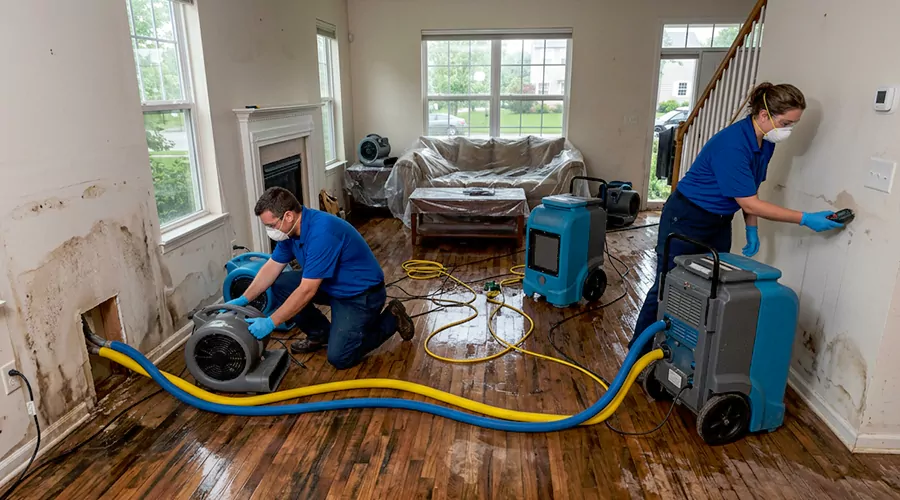
After emergency water damage, stop the water source and stay away from electrical hazards before you begin any cleanup. Standing water should then be removed as soon as conditions are safe. In 2026, water damage restoration averages about $3,868 and can range from $450 to $16,000.
The first 24 to 48 hours matter because wet drywall or flooring can begin supporting mold growth. Water can also move beneath finished surfaces before you notice visible changes.
Your response should follow a clear order. Protect people first and control the source before extraction or drying begins.
What Should You Do Immediately After Water Damage?
The first few minutes should focus on stopping more water from entering the property and keeping people away from unsafe areas. Don't rush into standing water before checking for electrical risks. Once conditions are safe, document the damage and begin removing water before it spreads farther.
Follow these immediate steps:
- Keep people away from standing water.
- Identify the source when possible.
- Stop the water supply if it is safe.
- Check for electrical hazards.
- Photograph the affected rooms.
- Move dry belongings away from the wet area.
- Start removing water when conditions permit.
- Begin drying wet materials as soon as possible.
Emergency water damage often becomes more expensive when the source continues running. A failed supply line can send water beneath flooring or into adjoining rooms within a short period.
Don't focus on cosmetic damage first. Controlling water and moisture is more important than cleaning stains or moving furniture around.
Should You Turn Off the Electricity?
Electricity should be turned off when water has reached electrical systems but only if the main disconnect can be reached from a completely dry location. Never walk through standing water to reach a breaker panel. Wet outlets or submerged appliances should be treated as electrical hazards.
Stay out of the affected area when:
- Water surrounds the electrical panel.
- Outlets are partly submerged.
- Electrical appliances are sitting in water.
- Wiring appears damaged.
- You see sparks.
- You smell burning material.
- The ceiling near electrical fixtures is saturated.
Never use electrical equipment while standing on a wet floor.
Electrical devices that became wet should remain off until they are completely dry and have been evaluated when necessary. Restoring power too early can create another hazard after the water itself is gone.
How Do You Stop the Source of Emergency Water Damage?
Stopping the source prevents the affected area from growing while cleanup is underway. Plumbing failures can often be controlled with a local shutoff valve or the main water valve. Roof leaks and groundwater require different responses because shutting off the household water supply won't stop them.
Common emergency sources include:
- Burst pipes
- Broken supply lines
- Water heater failures
- Appliance leaks
- Toilet overflows
- Roof leaks
- Sump pump failures
- Sewer backups
- Stormwater intrusion
If a plumbing fixture caused the problem, shut off the nearest valve when possible. Use the main household shutoff if the individual source cannot be controlled.
Place a temporary container beneath a minor roof drip only when the area is electrically safe. Avoid climbing onto a wet roof during severe weather.
Emergency water restoration cannot progress effectively while new water continues entering the building.
Should You Document Water Damage Before Cleaning?
Photographing the damage before major cleanup creates a clear record of what was affected. Take wide photos of each room and closer images of damaged materials. Record the suspected water source when it can be photographed safely. Documentation can also help you remember what was removed later.
Photograph:
- Standing water
- Wet flooring
- Damaged drywall
- Ceiling stains
- Furniture damage
- Appliances near the water
- The suspected leak source
- Items that may need disposal
Take photos before moving large amounts of material when possible.
Keep receipts for pumps or equipment rentals. Save invoices for temporary plumbing repairs as well.
Documentation should not delay urgent safety work. If water is actively spreading, stop the source first.
How Do You Remove Standing Water?
Standing water should be removed after the source is controlled and the area has been confirmed safe. Small clean-water losses may be manageable with towels or wet extraction equipment. Large volumes require stronger pumping capacity. Contaminated water requires greater caution because direct contact can create health risks.
For a small clean-water loss:
- Remove visible puddles first.
- Lift removable rugs.
- Extract moisture from carpet.
- Check beneath furniture.
- Inspect flooring edges.
- Look for water entering nearby rooms.
Emergency water removal becomes more difficult when water has soaked into carpet padding or subfloors. The visible puddle may represent only part of the moisture in the room.
Use only equipment designed for wet extraction. Never use an ordinary household vacuum to collect water.
How Can You Tell What Type of Water You Are Dealing With?
The water source matters because contamination affects what can safely be cleaned or saved. Water from a sanitary supply line begins with a much lower contamination risk than sewage. Outdoor floodwater must also be treated carefully because you cannot identify all contaminants by sight.
Water damage is commonly considered in three contamination categories.
Clean Water
Clean water begins from a sanitary source. A broken household supply pipe is a common example.
Materials exposed to clean water often have a better chance of being dried and saved when action begins quickly.
Gray Water
Gray water contains some contamination. Certain appliance discharges can fall into this group depending on what the water contains.
Porous materials require more careful evaluation after this type of exposure.
Black Water
Black water contains serious contamination. Sewage and outdoor floodwater can fall into this category.
Black water should not be handled like a normal household spill. Direct contact should be avoided because the water can contain harmful organisms or chemicals.
The water category can also change cleanup cost. In 2026, average restoration pricing is about $3.50 per square foot for clean water and $5.25 for gray water. Black water averages about $7.50 per square foot.
How Do You Start Drying the Property?
Drying should begin as soon as standing water has been removed and contaminated material is under control. Air movement helps water evaporate from wet surfaces. Dehumidification removes that moisture from the surrounding air. Hidden areas must also be checked because visible surfaces often dry first.
A practical drying plan can include:
- Remove wet rugs from the room.
- Open interior doors where appropriate.
- Open cabinets exposed to clean water.
- Use dehumidifiers to lower humidity.
- Direct air movement across wet surfaces.
- Check carpet padding.
- Inspect the lower sections of walls.
- Measure moisture when equipment is available.
Wet materials should generally be dried within 24 to 48 hours when possible.
Indoor relative humidity should stay below 60 percent. A range around 30 to 50 percent is preferable for normal moisture control.
The room shouldn't be considered dry simply because the floor no longer feels wet. Moisture can remain inside wood or drywall long after the exposed surface changes appearance.
What Materials Should You Check for Hidden Water?
Hidden moisture often causes the most expensive damage because it remains after the visible water is gone. Water can travel through seams and wall cavities. A wet area can therefore extend several feet beyond the original puddle without being obvious from the room.
Pay close attention to:
- Carpet padding
- Subflooring
- Baseboards
- Drywall
- Insulation
- Cabinets
- Hardwood flooring
- Ceiling cavities
- Wall framing
- Areas beneath appliances
Signs of hidden moisture include swelling or peeling paint. A musty odor can also develop when materials remain damp.
Emergency water damage cleanup should continue until hidden areas have been checked. Surface drying alone can leave moisture sealed beneath flooring.
A moisture meter can help compare affected materials with similar dry materials elsewhere in the home.
What Should Be Removed After Water Damage?
Materials should be removed when they cannot be dried safely or have lost their physical condition. Contamination is another major factor. A clean-water loss may allow more materials to remain while sewage exposure can require removal of porous items that would otherwise look reusable.
Use this general guide:
| Material | May Be Saved When | Replacement Is More Likely When |
|---|---|---|
| Drywall | Exposure is limited and board remains firm | Soft or contaminated |
| Hardwood | Dried quickly with limited distortion | Severely warped or damaged |
| Carpet | Clean water with rapid extraction | Sewage or prolonged saturation |
| Carpet padding | Limited clean-water exposure | Saturated or contaminated |
| Insulation | Limited exposure depending on material | Waterlogged or contaminated |
| Particleboard | Very minor surface exposure | Swollen or crumbling |
| Solid wood furniture | Structurally sound after drying | Severe swelling or contamination |
Don't reinstall finishes while the structure remains wet.
Removing damaged drywall can expose wet framing behind the wall. That extra access may be necessary before drying can finish.
How Does Water Damage Progress Over Time?
Water damage becomes harder to control as moisture spreads into additional materials. The exact speed depends on the source and building materials. However, delaying extraction gives water more time to reach drywall or flooring. Repair costs can increase as more materials become affected.
| Stage | What May Be Happening | Typical 2026 Cost Context |
|---|---|---|
| Limited loss | Small area with minimal saturation | $150 to $500 |
| Significant loss | One room with wider moisture spread | $1,500 to $5,000 |
| Extensive loss | Walls and flooring heavily affected | $5,000 to $15,000 |
| Major disaster | Widespread or prolonged flooding | $15,000 to $100,000 |
These figures represent general damage classes rather than a guaranteed timeline.
A small leak doesn't automatically become a large restoration project. Fast source control can stop that progression.
The counterintuitive point is that water depth isn't the only sign of severity. A slow hidden leak can damage several layers of a wall while creating only a small visible stain.
What Warning Signs Mean the Damage Is Serious?
Serious water damage often shows up through changes in the building materials rather than the amount of visible water. Buckling floors or sagging ceilings can indicate deeper saturation. Returning stains can also show that the source has not been corrected or moisture remains hidden.
Watch for these warning signs:
- A ceiling begins sagging.
- Hardwood flooring starts buckling.
- Drywall feels soft.
- Baseboards begin swelling.
- Paint bubbles or peels.
- Water appears near outlets.
- Carpet padding stays wet.
- A musty odor develops.
- Mold becomes visible.
- The same stain returns after drying.
- Water keeps entering after cleanup.
- Several rooms show moisture damage.
Emergency water damage repair should not start until the source has stopped and the structure is dry.
Replacing damaged drywall too soon can hide moisture behind the finished wall. New flooring can create the same problem over a wet subfloor.
Can You Handle Emergency Water Damage Yourself?
A small clean-water loss can sometimes be handled at home when the source is controlled and no electrical hazard is present. DIY cleanup becomes less appropriate as the affected area grows. Sewage and floodwater also require more caution because contamination can extend beyond what you can see.
DIY work may be reasonable when:
- The source is clean water.
- The affected area is small.
- Water was discovered quickly.
- Electricity is safely separated.
- No ceiling is sagging.
- Water hasn't entered several rooms.
- Materials begin drying promptly.
- No sewage is involved.
You can use a hygrometer to check indoor humidity. A moisture meter can also help determine whether drywall or wood remains wetter than nearby unaffected materials.
Stop DIY work if the situation becomes unsafe. A larger cleanup requires different equipment and safety controls.
When Should You Call a Professional?
Professional help is appropriate when water affects several rooms or enters concealed building spaces. Sewage and outside floodwater also require greater control. Electrical exposure or unstable ceilings are clear reasons to stay out. Professional drying is useful when household equipment cannot reduce moisture effectively.
Consider emergency water damage restoration when:
- Standing water covers a large area.
- Water reached electrical systems.
- Several rooms are affected.
- The ceiling is sagging.
- Insulation is saturated.
- Hardwood flooring is severely buckled.
- Sewage entered the property.
- Outdoor floodwater entered the home.
- Water has entered wall cavities.
- Mold is already visible.
- Moisture remains after active drying.
- You cannot identify the source.
Emergency water damage restoration services can use higher-capacity extraction equipment when the water volume is large. Commercial dehumidification can also remove moisture faster from a heavily affected space.
A 24 hour water damage restoration response can be particularly useful when the loss happens overnight or during a weekend. Waiting for normal business hours can allow the wet area to grow.
Emergency water damage repair usually comes after extraction and drying. Repairing first can conceal damage rather than correct it.
How Much Can Emergency Water Damage Cost in 2026?
Water damage restoration averages about $3,868 nationally in 2026. Projects can range from roughly $450 to $16,000 based on contamination and the amount of material affected. Another current national estimate places many typical restoration projects between $2,000 and $6,000.
The water type creates a major difference in cost.
| Water Type | Typical 2026 Cost Per Square Foot |
|---|---|
| Clean water | About $3.50 |
| Gray water | About $5.25 |
| Black water | About $7.50 |
The type of repair also affects the total:
- Drywall repair can run about $300 to $850.
- Ceiling repair can cost about $450 to $1,600.
- Basement damage can cost about $500 to $2,800.
- Roof-related water damage can cost about $400 to $2,000.
Emergency water damage restoration can cost more when after-hours response or extensive extraction is required. Hidden damage can also add expenses after the visible water is removed.
How Can You Prevent Mold After the Emergency?
Preventing mold depends on removing moisture rather than simply cleaning visible stains. Wet materials should be dried within 24 to 48 hours when possible. Indoor humidity should also be controlled during the drying process. Materials that cannot dry completely may need removal before repairs begin.
Use these steps:
- Correct the original leak.
- Remove standing water quickly.
- Check beneath carpet.
- Dry exposed building materials.
- Keep humidity below 60 percent.
- Remove materials that remain saturated.
- Check hidden spaces for moisture.
- Watch for returning stains.
- Investigate musty odors.
- Continue monitoring after equipment is removed.
Don't paint over wet drywall. A fresh surface can hide moisture without changing the conditions behind it.
The same applies to flooring. New flooring should not be installed over a wet subfloor.
How Can You Reduce the Risk of Another Water Emergency?
Future water damage can often be reduced by inspecting common failure points before leaks become large. Plumbing connections deserve frequent attention. Basement drainage and roof systems should also be checked before severe weather. Water alarms can provide early warning in areas where leaks might otherwise remain hidden.
A simple maintenance routine includes:
- Check plumbing connections monthly.
- Inspect appliance supply hoses several times each year.
- Look around the water heater for moisture.
- Test the sump pump before heavy rain.
- Clean gutters when debris builds up.
- Keep downspouts directed away from the foundation.
- Check ceilings after major storms.
- Install water alarms near leak-prone areas.
- Inspect previous repair areas for new stains.
- Learn where the main water shutoff is located.
Knowing the location of your main shutoff can save valuable time after a pipe bursts.
The best emergency plan is one you understand before water starts spreading.
Conclusion
Emergency water damage requires fast action in the correct order. Protect people first and stop the water before removing standing water or starting structural drying. Check hidden areas because walls or floors may stay wet after visible water disappears. Large or contaminated losses deserve professional attention. This week, locate your main water shutoff and make sure every adult in the home knows how to reach it.
Frequently Asked Questions
How fast should you respond to emergency water damage?
Respond as soon as the area is safe. Wet materials should generally be dried within 24 to 48 hours to reduce the chance of mold growth.
Should you call insurance before removing water?
Document the damage and contact your insurer quickly when a claim may be involved. However, don't leave actively spreading water in place just to wait for an insurance response.
Can fans dry a water-damaged wall?
Fans can support evaporation from exposed surfaces. They do not prove that insulation or the inside of a closed wall cavity is dry.
Can water damage be hidden behind drywall?
Yes. Water can travel inside wall cavities and wet the back of drywall before obvious staining appears on the finished side.
Should wet carpet always be removed?
Not always. Carpet affected by a small clean-water loss may sometimes be dried. Sewage exposure or prolonged saturation makes removal more likely.
Can mold grow after the water is gone?
Yes. Moisture can remain inside porous materials after standing water disappears. Mold risk continues until those materials have been properly dried.